 WhatsApp: +86 18020776782
 Time: 24/7/365 Support

Hot Categories
Woodward 9905-971 Compatibility Guide for Existing LinkNet Control Systems2026-10-23
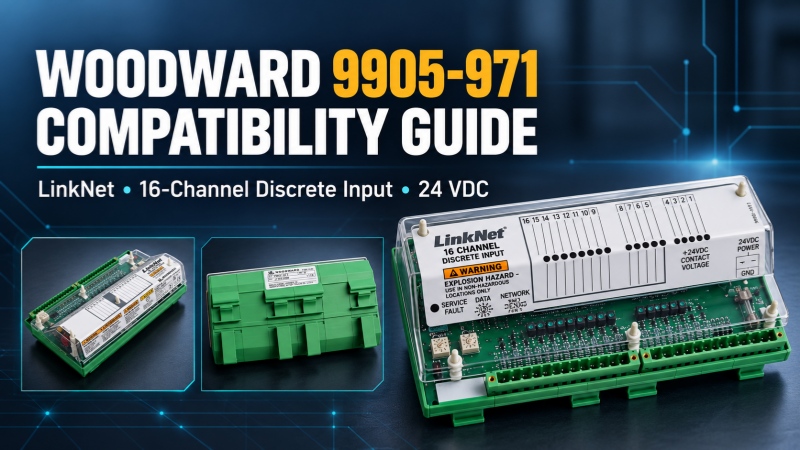
In gas engines, steam equipment, compressors, and power generation control systems, remote I/O modules typically undertake tasks such as field signal acquisition, status feedback, and controller communication. The Woodward 9905-971 is a 16-channel discrete input module in the LinkNet series, with a rated input of 24 VDC. It is mainly used to transmit the switching status of field switches or relays to the corresponding control system.
As the first-generation LON-based LinkNet product line enters the later stages of its lifecycle, more and more maintenance personnel are encountering problems such as compatibility, wiring, software configuration, and upgrade paths when replacing Woodward 9905-971. Having the same model number does not mean that the modules can be directly interchanged in any LinkNet, 723, or 723PLUS system. For operating equipment, correctly identifying the controller, network architecture, and field wiring is key to reducing downtime risks.
Product Positioning of Woodward 9905-971
Woodward's official product change notice lists 9905-971 as a LinkNet 16 channel discrete input, 24 VDC module. This module belongs to the first generation LON LinkNet node, which is used to collect discrete input signals and transmit the signal status to the higher-level controller through the LinkNet communication network.
In Woodward's official manual, the discrete input module receives inputs from on-site switches and relays. The module processes the input status of each channel through optocouplers and indicator lights, and the internal processor transmits the data to the controller through a transceiver. For systems using 723 or 723PLUS controllers, the input module is not only an independent signal board, but also forms a complete data link with controller software, node addresses, communication lines, and field terminal assignments.
Therefore, when purchasing or replacing Woodward 9905-971, it is not only necessary to verify the shell label and product number, but also to confirm the upper controller, LinkNet network type, and original application configuration connected to the module.
Key Compatibility Points for Existing LinkNet Systems
The first step is to determine whether the installation still uses the original LON-based LinkNet architecture. Woodward states that older LinkNet modules such as the 9905-971 are non-preferred products and are not recommended for new systems. When the existing controller and LinkNet network remain in service, replacement planning should be based on the original control logic and approved wiring documentation. Woodward PCN 06923Second, the actual wiring for the 24 VDC power supply and input circuits must be confirmed. The wiring diagram for the discrete input module in the official manual shows that the module includes power terminals, discrete channel terminals, and LinkNet communication terminals. The field switches, relay contacts, and common terminal connections may vary from project to project, and the purpose of the terminals cannot be inferred solely from the appearance of the module. Before replacement, photos of the original terminals, wire number records, and control cabinet wiring diagrams should be preserved.
Third, the LinkNet communication lines need to be verified.According to the Woodward official manual, the LINKnet I/O module communicates with the 723PLUS controller via shielded twisted-pair cable. Network cables, shielding, node connections, and terminal configurations all affect communication stability. After replacing a module, if the controller cannot recognize the node, the communication lines, module address, power supply status, and application configuration should be checked first, rather than immediately diagnosing a module fault.
The fourth step is to confirm that the controller software supports the selected module configuration. Woodward’s product change notice warns that moving older LON LinkNet nodes to a newer platform may require software changes in existing 5200 CPU systems. In other words, even when two modules appear to provide a similar function, they should not automatically be described as plug-and-play replacements.
Lifecycle Status of Woodward 9905-971
Woodward official documents have included 9905-971 in the list of old LON LinkNet modules and marked it as a non preferred product. Another official product change notice states that the relevant product lines will cease production and implement final shutdown and inventory clearance arrangements starting from January 2024.
This lifecycle information is crucial for the maintenance team. For devices that are still running, it is recommended to establish a spare parts list for existing modules, recording the model, hardware version, installation location, controller type, network address, and on-site application. For new projects, priority should be given to evaluating the platforms currently supported by Woodward, rather than continuing to use 9905-971 as the preferred module for the new system.
It should be noted that Woodward's official information lists new models of the LINKnet HT series, including 16 point discrete input modules such as 8200-1204. However, official documents also indicate that the upgrade process may involve software and system adjustments. Therefore, 8200-1204 cannot be promoted as a direct, unconditional substitute for Woodward 9905-971 without engineering verification. Before actual migration, the controller, communication protocol, software version, terminal layout, on-site power supply, and system certification requirements should be confirmed.
Checklist Before Replacing Woodward 9905-971
Before submitting an inquiry or arranging a replacement, it is recommended to prepare the following information:
On site complete model: Confirm 9905-971, revision information, and serial information on the nameplate.
Superior controller model: Confirm the use of 723, 723PLUS, 5200 CPU or other Woodward control platforms.
Network type: Confirm whether the installation uses first-generation LON LinkNet or a newer communication architecture.
Field wiring: Provide photographs of the power terminals, 16 discrete inputs, common connections and communication terminals.Application information: Confirm the node address, I/O allocation and control logic associated with the original module.
Replacement objective: Clarify whether the requirement is a like-for-like spare, continued operation of the existing system or a complete platform upgrade.
This information helps engineers decide whether the Woodward 9905-971 should remain in the original configuration or whether a broader migration plan is more appropriate.
How to Reduce Part-Number Errors During Enquiries
For a LinkNet module that has reached a non-preferred or discontinued status, an enquiry should not simply say “9905-971 module.” A more useful request should include the complete part number, a clear photograph of the product label, the controller model, the application, the existing communication network, the field voltage and the customer’s intended outcome.If the customer only needs to maintain the existing equipment, the main checks should focus on the same model, the same function and compatibility with the installed control system. If the customer wants to move to a newer LINKnet HT platform, the quotation should clearly identify the possible software, wiring and commissioning work involved. This avoids incorrect purchasing decisions based solely on appearance or channel count.
Our company has a history of over 20 years and maintains an extensive inventory; please feel free to contact us.
Sales manager:Jim Pei
Email:sales1@apterpower.com
Wechat: ZXH18020776782
Phone/WhatsApp:+86 18020776782
- Contact Us
-
Who are we?
ARWELL is a global supplier of PLC, DCS, VFD, HMI and other industrial automation components.We provide industrial automation parts and sourcing solutions for a wide range of applications.
 ZXH18020776782
 sales1@apterpower.com

Copyright © 2024 ARWELL LIMITED
Disclaimer: ARWELL sells new and surplus products and develops channels for purchasing such products. This website has not been approved or recognized by any of the listed manufacturers or trademarks.
ARWELL is not an authorized distributor, dealer, or representative of the products displayed on this website. All product names, trademarks, brands, and logos used on this website are the property of their respective owners. The description, explanation, or sale of products with these names, trademarks, brands, and logos is for identification purposes only and is not intended to indicate any association with or authorization from any rights holder.